
Can Invisalign Help With Crowding, Gaps or Bite Problems?
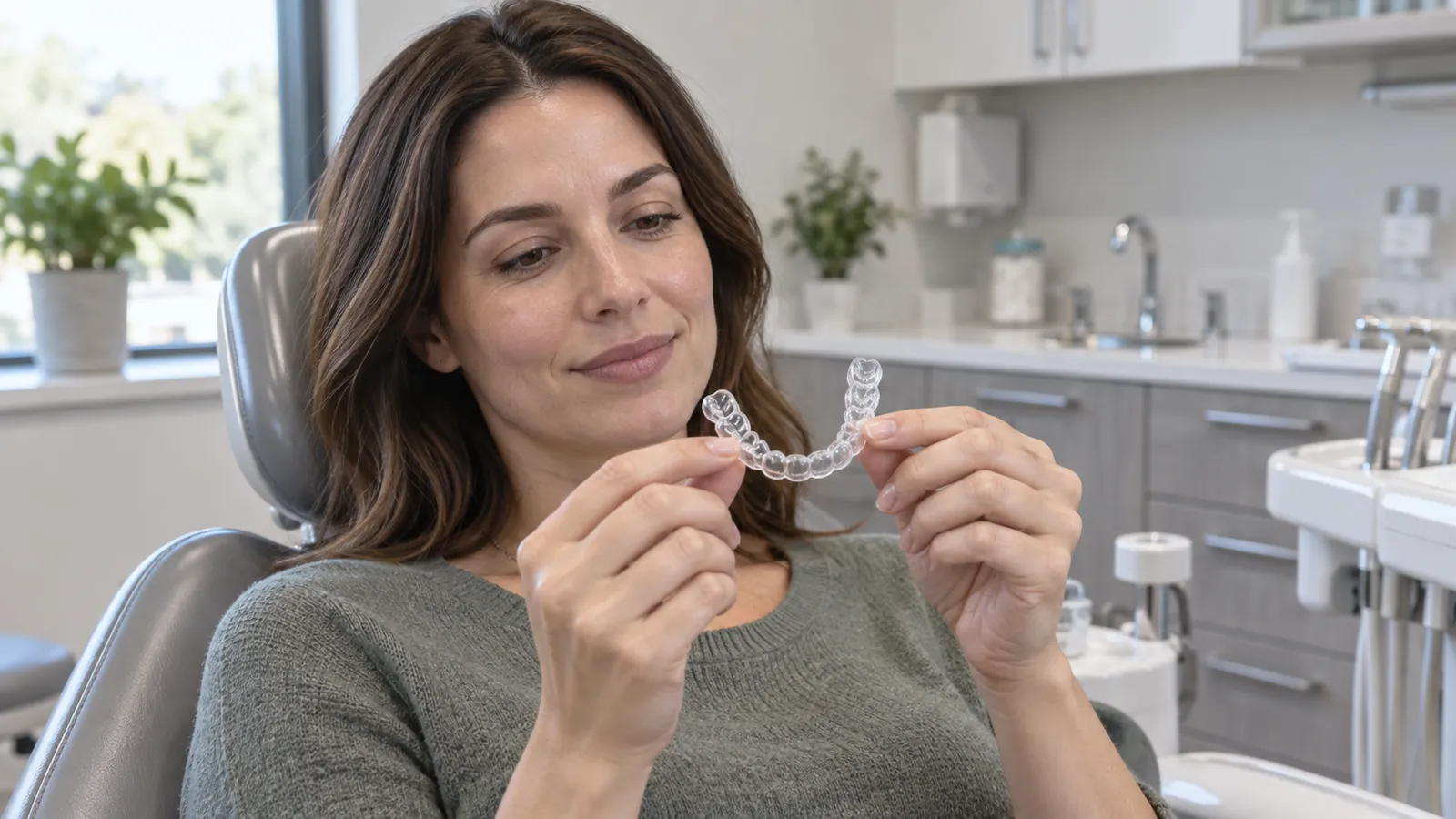
Invisalign clear aligners may help address crowded teeth, gaps, crooked or rotated teeth, and certain overbite, underbite, or crossbite concerns. Whether Invisalign is appropriate depends on the type and severity of the alignment problem, the health of your teeth and gums, your bite, and your treatment goals.
Clear aligners can handle many orthodontic movements, but they are not the right tool for every case. Some patients may benefit from braces, another orthodontic approach, or treatment to improve oral health before tooth movement begins. A consultation is needed to understand what can be treated predictably in your specific situation.
How Does Invisalign Move Teeth?
Invisalign uses a planned series of removable, transparent aligners that fit over the teeth. Each aligner applies controlled pressure to selected teeth. As you move through the series as directed, the teeth gradually shift toward the positions set out in the treatment plan.
The dentist begins by assessing your teeth, gums, jaw relationships, and bite. Digital scans, photographs, and imaging may be used when clinically appropriate to create records and plan the desired movements. The aligners are then designed as a sequence rather than as one appliance that completes every movement at once.
Treatment may also involve small tooth-coloured attachments bonded to certain teeth, elastics, or other supporting steps. These details depend on the case. Aligners generally need to be worn consistently and removed for eating, drinking anything other than water, brushing, and flossing. The exact wear schedule and checkup plan should come from the treating dental professional.
Can Invisalign Help With Crowded Teeth?
Invisalign may help with mild, moderate, and some more involved crowding, but suitability depends on how much space is needed and how the crowding relates to the overall bite. Crowding occurs when the teeth do not have enough room to line up normally, causing teeth to overlap, rotate, or sit outside the dental arch.
An aligner plan may create or redistribute space and guide selected teeth into improved positions. The clinician must consider more than how the front teeth look. Root position, gum and bone support, jaw relationships, tooth size, and the way the upper and lower teeth meet can all affect what movements are appropriate.
Possible factors in a crowding assessment include:
- How many teeth are crowded and where they are located
- The amount of space required to align them
- Whether teeth are significantly rotated or tipped
- The relationship between the upper and lower arches
- The health of the gums and supporting bone
- Whether attachments, elastics, space creation, or another technique may be needed
Severe crowding is not automatically excluded from clear-aligner treatment, but it may require a more complex plan or a different approach. Only an assessment can show which option offers reasonable control of the necessary movements.
Can Invisalign Close Gaps Between Teeth?
Invisalign may close some gaps by moving neighbouring teeth toward one another. However, the size, number, location, and cause of the spaces influence the plan. A small gap between front teeth is different from spacing throughout the mouth or a space created by a missing tooth.
Before recommending aligners, the dentist may look for reasons behind the spacing, including tooth-size differences, missing teeth, gum health, the position of the tongue or other oral habits, and the shape of the dental arch. If the cause is not considered, closing the visible space alone may not address the full concern.
Some gaps may be better managed with a combination of treatments. For example, restorative care may be discussed when tooth shape or missing tooth structure contributes to the space. A plan may also include retainers after active treatment because teeth can shift over time. The appropriate solution depends on the diagnosis and your goals.
Which Bite Problems May Invisalign Be Used to Treat?
Invisalign may be considered for certain bite concerns, including some overbite, underbite, and crossbite cases. A bite problem describes how the upper and lower teeth meet. The same label can cover cases with very different causes and levels of complexity, so the name of the bite issue does not determine candidacy by itself.
An overbite usually refers to excessive vertical overlap of the upper front teeth over the lower front teeth. An underbite occurs when lower teeth sit ahead of upper teeth in part of the bite. A crossbite occurs when one or more upper teeth bite inside the lower teeth rather than outside them.
Clear aligners may move teeth to improve some of these relationships. Attachments or elastics may sometimes support the planned movement. However, bite concerns can involve tooth position, jaw growth, skeletal relationships, or a combination of factors. Aligners move teeth; they do not provide the same solution for every jaw-related problem.
A careful assessment is especially important when a bite issue affects chewing, tooth wear, gum health, jaw comfort, or facial growth. The clinician can explain which part of the concern may be addressed with aligners and whether another method or referral should be considered.
When Might Braces or Another Approach Be Recommended?
Braces or another orthodontic approach may be recommended when the required movements are too complex or less predictable with removable aligners, when a patient cannot wear aligners consistently, or when the bite relationship requires different mechanics. This does not mean one system is universally better; each offers different advantages and limitations.
Braces may provide continuous force because they stay attached to the teeth. They can also give the clinician direct control over certain rotations, root movements, vertical changes, or complex bite relationships. Clear aligners may appeal to patients who value removability and a less noticeable appearance, but successful use depends heavily on wearing them as directed.
Other factors can change the recommendation:
- Active tooth decay or gum disease that should be managed first
- Missing teeth, worn teeth, crowns, bridges, or implants that affect planning
- Jaw growth or skeletal relationships
- The need for movements that may require specialized orthodontic mechanics
- A preference or lifestyle that makes one appliance easier to manage consistently
Your clinician should explain the options that fit the diagnosis, including the expected responsibilities and limitations of each approach. A balanced discussion is more useful than choosing a treatment based only on appearance.
How Is Invisalign Suitability Assessed?
Invisalign suitability is assessed through a dental and orthodontic evaluation, not an online checklist. The clinician considers your main concerns, medical and dental history, oral health, tooth positions, bite, jaw relationships, and the movements needed to reach a practical treatment goal.
The assessment may include:
- An examination of the teeth, gums, and bite
- Digital scans or impressions of the teeth
- Photographs and dental imaging when clinically appropriate
- A review of existing fillings, crowns, bridges, implants, or missing teeth
- Discussion of treatment goals, daily aligner wear, oral hygiene, and retention
- Evaluation of whether clear aligners can control the required movements
Good oral health matters because aligners cover the teeth for much of the day. Untreated decay or gum inflammation may need attention before orthodontic movement begins. The clinician will also consider whether you can remove, clean, and replace the aligners reliably and attend scheduled progress visits.
Digital treatment simulations can help illustrate a proposed plan, but they are planning tools rather than guarantees of an exact result. Teeth respond biologically, and refinements or plan changes may sometimes be needed. Ask what the plan is intended to improve, what limitations apply, and how progress will be monitored.
Frequently Asked Questions About Invisalign
Invisalign may be an option for some substantial crowding, but severe cases can require complex space management or movements that may be better handled with braces or another approach. An exam and diagnostic records are needed before a clinician can advise you.
No. Clear aligners may close many spaces, but the cause and size of the gap, missing teeth, tooth proportions, gum health, and the bite all affect treatment. Some spaces may need restorative or combined care.
Invisalign may improve certain overbite concerns by moving teeth, sometimes with attachments or elastics. Cases driven mainly by jaw relationships or requiring complex movement may need a different approach. Suitability is individual.
Not necessarily. Treatment time depends on the starting problem, complexity, biological response, wear consistency, and treatment goals. Neither aligners nor braces are automatically faster for everyone, and a personalized estimate can only be made after assessment.
The only reliable way to know is through a consultation. Many adults and teens may be assessed for Invisalign, but candidacy depends on oral health, alignment, bite, case complexity, goals, and the ability to wear and care for aligners consistently.
Talk to Smile Design Dental Care About Invisalign
A dental professional can evaluate your teeth and bite, explain whether clear aligners may be suitable, and compare other options when appropriate. The consultation is the place to ask about the proposed mov ements, expected responsibilities, possible limitations, and how your progress would be monitored.
If you are considering Invisalign for crowding, gaps, or a bite concern, contact Smile Design Dental Care to schedule a consultation. The practice offers Invisalign clear aligners and has locations in Oakville, Hamilton, Stoney Creek, Stoney Creek East, and Binbrook.